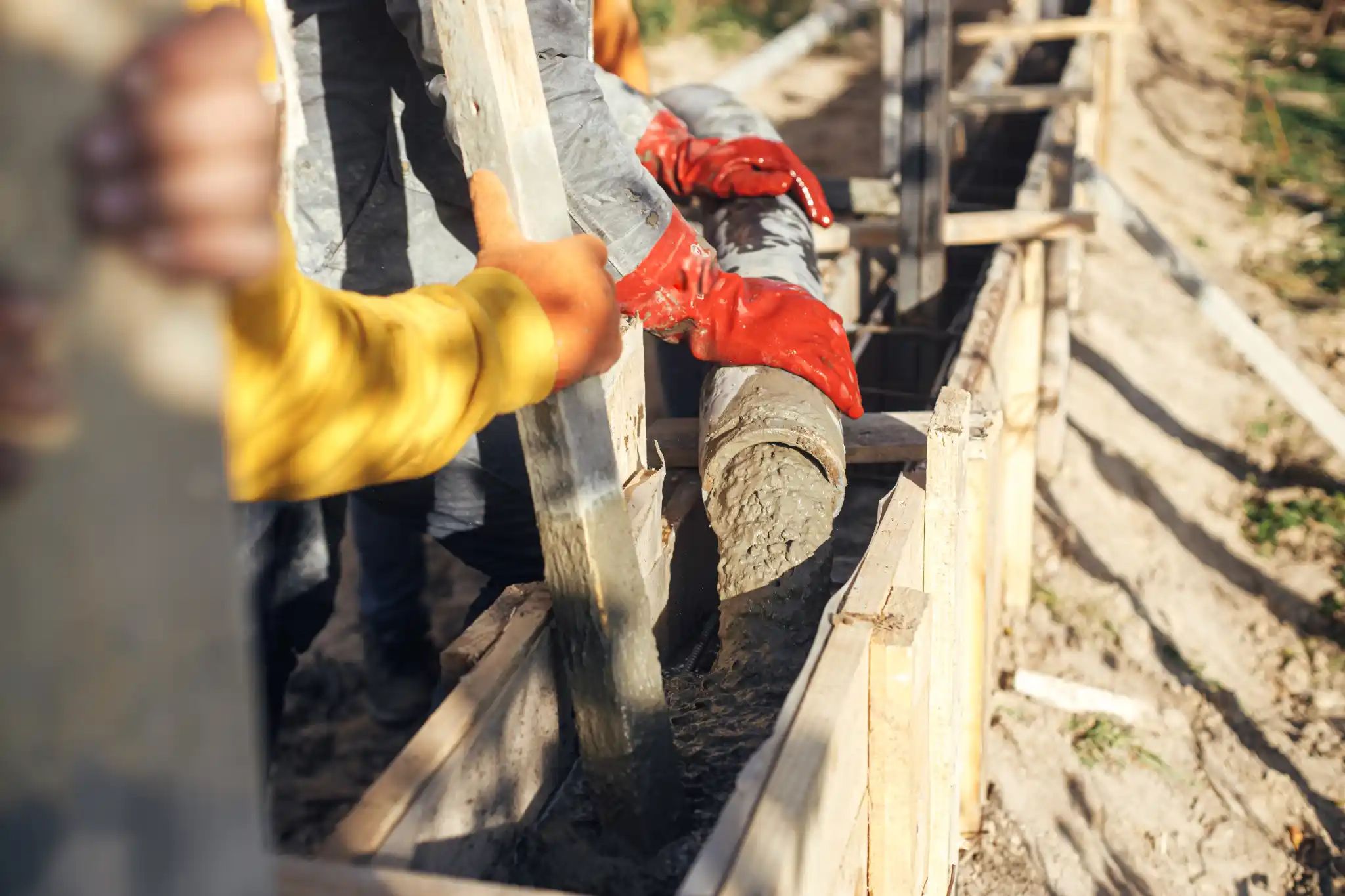
Texas houses stand on two fundamentally different systems, and everything about foundation problems — the symptoms, the repairs, the costs — depends on which one you own.
The two systems
Slab-on-grade (most homes built after ~1960): a single monolithic pour of reinforced concrete sitting directly on the soil. The house and the slab move together — which means when the soil moves the slab, the whole structure feels it.
Pier and beam (most homes built before ~1960, plus some custom builds): wood floor framing carried on beams, resting on concrete or masonry piers, over a crawl space. The structure floats above the soil on discrete supports.
How each one fails on Texas clay
Slab failures
- Perimeter settlement — the slab edge dries and drops in droughts (the protected center stays wetter), cracking brick and racking door frames
- Edge heave — the reverse after heavy rains or over-watered beds
- Interior dips — from plumbing leaks softening soil under the middle of the slab
- Under-slab plumbing damage — leaks both cause movement and are caused by it, invisibly
Pier & beam failures
- Settling or tilting piers — the same clay cycle working on small footings
- Crowned or sagging beams and bouncy floors between supports
- Rot and pest damage — sills and joists in a humid crawl space are consumables on a multi-decade timescale
- Moisture and ventilation problems that accelerate all of the above
Repair and cost comparison
| Slab | Pier & beam | |
|---|---|---|
| Typical structural repair | Underpinning with piers ($4k–$16k+) | Releveling/shimming ($2.5k–$10k) |
| Minor repair | Crack repair, slab injection | Shims, individual supports |
| Wood repair needed? | No | Sometimes (sills, joists) |
| Plumbing access | Buried in/under concrete | Open crawl space |
| Ongoing maintenance | Moisture management around perimeter | Moisture + wood + ventilation checks |
Neither is “better.” Pier and beam is cheaper to re-level and friendlier to repair incrementally; slabs are lower-maintenance until the day they aren’t. On highly expansive clay, pier and beam arguably tolerates the cycle more gracefully — which is worth remembering when someone implies an older foundation type is automatically a defect.
If you’re buying
- Slab home: look at the brick (stair-step cracks), door fit, floor slope; ask for any prior repair warranty and whether it transfers. Prior repaired movement with a transferable warranty is often a better position than never-evaluated movement.
- Pier & beam home: get someone into the crawl space — pier condition, wood condition, moisture. A house that needs $3k of shimming is not a broken house; a crawl space full of rot is a bigger conversation.
Either way, an independent evaluation beats guessing, and the warning-signs guide covers what to look for yourself. Local soil context for any Texas city is on its city page.
Quick answers
Is pier and beam cheaper than slab to repair?
Usually yes. Pier-and-beam releveling in Texas typically runs $2,500–$10,000 (shims, new supports, some wood repair), while slab underpinning with piers typically runs $4,000–$16,000+. The exception is a crawl space with extensive rot — major sill and joist replacement can close the gap.
Is pier and beam better than a slab in Texas?
On highly expansive clay, pier and beam arguably handles the shrink-swell cycle more gracefully and is cheaper to re-level, with accessible plumbing as a bonus. Slabs are lower-maintenance until they move. Neither is a defect — they're different systems with different failure modes and repair playbooks.
How do I tell if my house is slab or pier and beam?
Look at the base of the house: vents or a crawl-space access door near ground level, floors a couple of feet above grade, and a bit of bounce underfoot mean pier and beam. Concrete visible at grade with floors at ground level means slab-on-grade. Most Texas homes built after about 1960 are slabs.