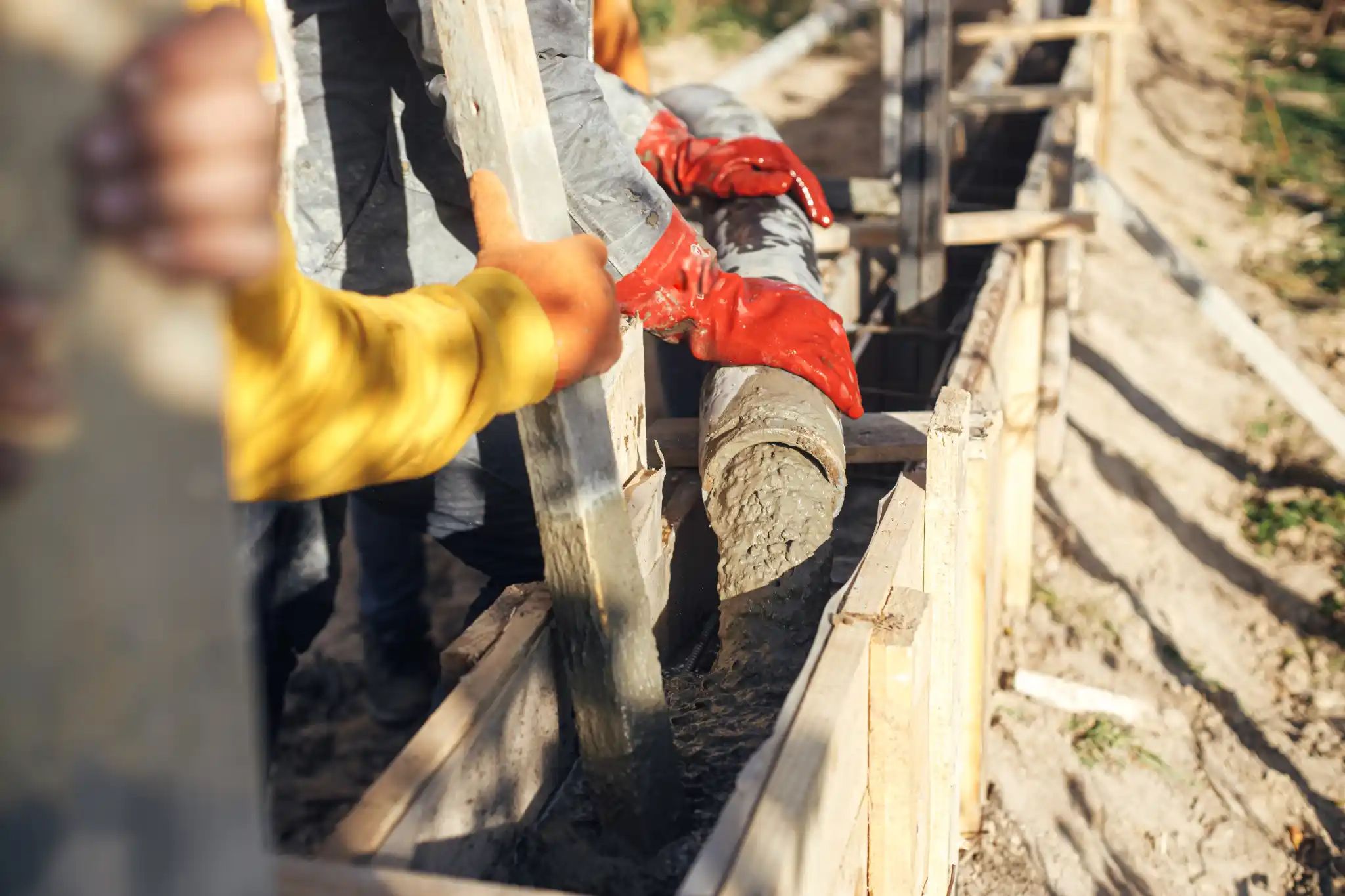
Drainage Correction & Root Barriers in Texas
Texas foundations rarely fail because concrete breaks. They fail because the moisture in the clay beneath them keeps changing — too wet on one side, too dry on another, different every season. Piers treat the symptom brilliantly, but moisture management treats the cause, and the repairs that last almost always include it.
Drainage correction covers grading, gutters and downspout extensions, surface drains and French drains — everything that stops water from ponding against (or being pulled from) your foundation. Root barriers address the other half: mature trees that dry out the clay on one side of the house faster than the rest.
or call (800) 555-0100
Drainage Correction & Root Barriers — free estimate
Tell us what you're seeing and a local foundation specialist will follow up — usually the same business day. Prefer to talk now? Call (800) 555-0100.
When this is the right repair
- Water ponds near the foundation after rain, or the grade slopes toward the house
- Movement is concentrated on the side with a flowerbed, missing gutters, or a big tree
- You're installing piers anyway — pairing drainage protects the investment
- Large trees within roughly 20 feet of the foundation in an expansive-clay region
When it isn't
- As a substitute for underpinning when a foundation has already settled significantly
- Anywhere the water source is a plumbing leak — test and fix the plumbing first
How the work goes
-
Water walk
Where roof water goes, where the lot sends runoff, where soil stays soggy or bone dry — mapped against where the movement is.
-
Surface first
Grading, gutters and downspout extensions are the cheap, high-yield fixes and come before anything buried.
-
Subsurface where needed
French drains intercept water moving through soil; surface drains capture ponding; both discharge away from the foundation.
-
Root barriers
A trenched physical barrier between tree and foundation slows root-driven drying without necessarily removing a healthy tree.
Across Texas: On the pancake-flat Gulf Coast prairie, drainage is frequently the primary problem, not a side note. In the Blackland belt, consistent perimeter moisture (including disciplined soaker-hose use in drought) measurably reduces movement. In arid West Texas the equation flips: the goal is keeping new water away from collapse-prone soils.
Drainage Correction & Root Barriers FAQs
Can drainage work alone fix my foundation?
If movement is early and moisture-driven, stabilizing the moisture sometimes stabilizes the house — it's the cheapest possible win. Settled structures still need underpinning; drainage then keeps the problem from continuing around the piers.
Do soaker hoses actually work?
Used consistently in droughts — spaced from the slab edge and run evenly around the perimeter — they reduce the shrink side of the shrink-swell cycle in clay regions. They are maintenance, not repair.
Will a root barrier hurt my tree?
A properly installed barrier prunes roots on one side; healthy mature trees typically tolerate it. It beats the alternative some contractors push — removing the tree — in most cases.
Local drainage correction & root barriers guides
- Drainage Correction & Root Barriers in Killeen
- Drainage Correction & Root Barriers in Temple
- Drainage Correction & Root Barriers in Weatherford
- Drainage Correction & Root Barriers in Cleburne
- Drainage Correction & Root Barriers in San Marcos
- Drainage Correction & Root Barriers in Sugar Land
- Drainage Correction & Root Barriers in Burleson
- Drainage Correction & Root Barriers in Kyle
- Drainage Correction & Root Barriers in Rosenberg
- Drainage Correction & Root Barriers in Copperas Cove
- Drainage Correction & Root Barriers in Harker Heights
- Drainage Correction & Root Barriers in Belton
- Drainage Correction & Root Barriers in Buda
- Drainage Correction & Root Barriers in Richmond
Not listed? Every Texas community has a local page — find your city.
What to expect — and what to ask
How the process works
- 1. Tell us what you're seeing. Call or send the form — cracks, sticking doors, slopes, timelines.
- 2. A local specialist evaluates on-site. Elevation readings across the slab, drainage walk-around, crawl-space inspection where applicable.
- 3. You get a written scope. Pier locations and count, method, drainage recommendations, warranty terms, price.
- 4. You decide — without pressure. For a five-figure structural repair, comparing bids is reasonable and any good contractor knows it.
Questions worth asking any bidder
- Which pier type, and to what expected depth in this soil?
- Is an independent structural engineer's report included or recommended?
- What exactly does the warranty cover — and does it transfer when I sell?
- How will you address the drainage or root cause, not just the symptom?
- What happens to my plumbing during the lift (hydrostatic test after)?
More in the guide: how to choose a foundation repair contractor.
Bedrock Texas is an independent referral network, not a contractor. We connect you with a vetted local foundation repair company and may be compensated for the referral — details in our disclosure. We never publish fabricated reviews or credentials.